
Neuropathy
Neuropathy is the weakness, numbness, and pain in the hands and feet due to damage to the peripheral nerves. The peripheral nerves are responsible for sending information from the brain and spinal cord to the rest of your body. Causes of Neuropathy include: traumatic injuries, infections, metabolic problems, exposure to toxins, and diabetes.
Diabetes is the most common cause, with more than half of the diabetic population developing some type of neuropathy. There are several types of neuropathy and they vary based on the damage of the nerves. Mononeuropathy is classified as only one nerve being damaged. When multiple nerves are affected, it is referred as polyneuropathy. One of the types of polyneuropathy is distal symmetric polyneuropathy. It is the most common for people with diabetes and starts when the nerves furthest away from the central nervous begin to malfunction. The symptoms begin with pain and numbness in the feet and then they travel up to the legs. A rarer form of polyneuropathy is acute symmetrical peripheral neuropathy, which is a severe type that affects nerves throughout the body and is highly associated with Guillain-Barre syndrome, an autoimmune disorder that attacks the peripheral nervous system and can be fatal. Although there are many types of neuropathy, most of them share the same symptoms such as pain, extreme sensitivity to touch, lack of coordination, muscle weakness, dizziness, and digestive problems. Since neuropathy affects the nerves, those affected should be careful of burns, infection and falling, as depleted sensations disguise such ailments.
The best way to prevent neuropathy is to manage any medical conditions such as diabetes, alcoholism, or rheumatoid arthritis. Creating and managing a healthy lifestyle can also go a long way. Having a healthy diet full of fruits, vegetables, whole grains and lean protein can keep the nerves healthy. These types of food have the nutrients to prevent neuropathy. Regularly exercising can help as well, but it is best to consult with a doctor about the right amount. In addition to diet and exercise, avoiding risk factors will also prevent neuropathy. This includes repetitive motions, cramped positions, exposure to toxic chemicals, smoking and overindulging on alcohol.
It's Time for Beautiful Feet


You don't need an excuse to have beautiful nails. Step outside without worrying about the appearance of your feet.
Simple Methods That May Help to Prevent Falling
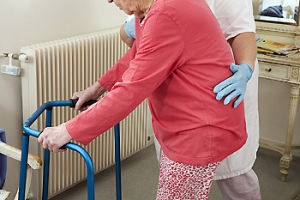
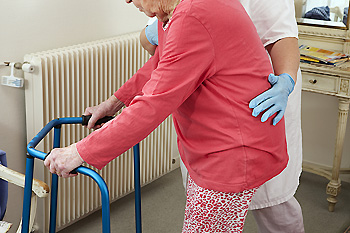
There are simple and effective ways that can help to prevent falling. When specific stretches and exercises are frequently performed the body can become stronger and a sense of balance may be increased. There are special training programs that are available which may help older people to maintain strength and improve balance. Many people enjoy practicing the Chinese martial art known as tai chi. This form of exercise can help to improve coordination by practicing slow, emphasized movements. Additionally, changes can be made in the home which may decrease the risk of falling. These can include changing the lighting to become brighter, removing frayed rugs and clutter, and promptly cleaning any spills that have happened. It is beneficial to wear shoes that fit well and are comfortable as this may help to avoid unnecessary tripping. It is wise to get regular physicals and eye examinations, where existing medications and eyeglasses can be evaluated. If you would like to learn about effective fall prevention methods, please consult with a podiatrist.
Preventing falls among the elderly is very important. If you are older and have fallen or fear that you are prone to falling, consult with Jon McCreary, DPM from Fort Worth Podiatry. Our doctor will assess your condition and provide you with quality advice and care.
Every 11 seconds, an elderly American is being treated in an emergency room for a fall related injury. Falls are the leading cause of head and hip injuries for those 65 and older. Due to decreases in strength, balance, senses, and lack of awareness, elderly persons are very susceptible to falling. Thankfully, there are a number of things older persons can do to prevent falls.
How to Prevent Falls
Some effective methods that older persons can do to prevent falls include:
- Enrolling in strength and balance exercise program to increase balance and strength
- Periodically having your sight and hearing checked
- Discuss any medications you have with a doctor to see if it increases the risk of falling
- Clearing the house of falling hazards and installing devices like grab bars and railings
- Utilizing a walker or cane
- Wearing shoes that provide good support and cushioning
- Talking to family members about falling and increasing awareness
Falling can be a traumatic and embarrassing experience for elderly persons; this can make them less willing to leave the house, and less willing to talk to someone about their fears of falling. Doing such things, however, will increase the likelihood of tripping or losing one’s balance. Knowing the causes of falling and how to prevent them is the best way to mitigate the risk of serious injury.
If you have any questions, please feel free to contact our office located in Fort Worth, TX . We offer the newest diagnostic and treatment technologies for all your foot care needs.
Falls Prevention
Elderly Americans are very susceptible to falls as they get older. Everyone experiences decreases in flexibility, balance, strength, and the senses as they age. This correlates to some eye-opening statistics. 1 in 4 Americans aged 65 and older fall each year. An elderly American is being treated for a fall in an emergency room every 11 seconds. In light of these striking statistics, one can see the importance of taking steps to prevent falls.
Finding an exercise program for the elderly is an excellent way to reduce the likelihood of falls. Look for an exercise program that improves strength and balance. Elderly people who live a more sedentary lifestyle, with little physical activity, are at an increased risk of falling. Wearing well-fitted footwear that provides good foot support and cushion will help prevent falls from poorly fitted shoes. Talking to a podiatrist about your susceptibility to falls and about inspecting your prescriptions will help to avoid any medication that could make falls more likely. Due to a decline in the senses among the elderly, having your eyes and hearing checked is recommended.
Around half of all falls occur in the household. Removing tripping hazards in the home and making it more accommodating to older persons can significantly reduce falls. Some notable household changes include increasing lighting around the house, installing grab bars in the shower and bathroom, and making sure the floor is clear of clutter. Other smart options include installing a shower chair, using rubber-bottomed rugs, and placing railings on both sides of stairwells.
Finally, discuss with a doctor and your family about your fear of falling. This will help to increase awareness among the population on the need for fall prevention. A lack of awareness on the matter, and a downplaying of importance are what increase the risks of falling. Following these tips can help to reduce the risk for yourself and your loved ones.
Foot Massage Therapy
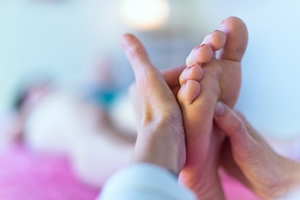
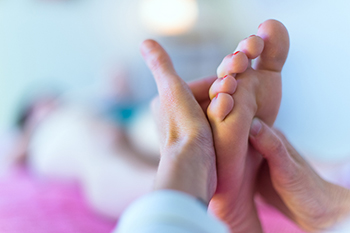
Foot massage therapy, a type of massage that focuses on the feet and lower legs, is often used to relieve stress, tension, fatigue, and pain. It also can be used to improve blood circulation to help prevent injuries and alleviate symptoms of chronic conditions like arthritis. This form of massage utilizes gentle pressure to the feet and legs. Swedish or trigger point massage techniques are typically employed. Risks of foot massage therapy include infection from the spread of bacteria and injury, such as cuts and bruises from over-massage. If you have pre-existing medical conditions (like heart disease or stroke history), it is important to consult with a podiatrist before getting such therapy. A podiatrist can also provide additional information about foot massage therapy and provide additional suggestions to treat foot and ankle discomfort.
Foot therapy is often necessary for those recovering from either foot deformities or foot injuries. If you have concerns regarding therapy, consult with Jon McCreary, DPM from Fort Worth Podiatry. Our doctor can provide the care you need to keep you pain-free and on your feet.
Most Common Injuries
People who are active or athletes are prone to a variety of injuries. Therefore, it is often important to take part in physical therapy in order to quickly get back on the right track.
What to Do When Injured
Physical Therapy – This specialized treatment will focus on the affected area, speeding up recovery and the overall healing process. It is a proven method that has helped millions of people return from any injury.
During physical therapy you will undergo regimented training to get back into full form. Training is often very difficult, especially at first when the foot feels weak. Physical therapy often involves:
Basic stretching and twisting exercises – getting the feet’s mobility and flexibility up.
Massaging – the therapist will massage the injured area in order to activate the muscles and relax them.
Strengthening Exercises – this allows the muscles in the affected area to regain their full strength, a vital step towards full recovery.
If you have any questions, please feel free to contact our office located in Fort Worth, TX . We offer the newest diagnostic and treatment technologies for all your foot care needs.
Foot Therapy for Sports Injuries
Whether in practice or in the game, athletes put their bodies through great stress. Some sports demand more from the body than others. However, every sport has an element of inorganic movement or unnatural motion. For example, in softball, a pitcher winds up and flings her body with an incredible amount of dexterity in order to get the most ideal velocity out of her pitches. This motion, incredibly taxing on the body, can cause serious injury.
One of the most common issues of athletic injuries happens in the feet. If it’s a damaging fracture that leaves the athlete sidelined or just a simple turf toe, foot injuries can still be very frustrating and painful. Regardless of the sport, athletes still require use of their feet in some fashion. This is why foot therapy is extremely vital for getting athletes back on the right track to return to the field.
No matter the injury, the best way to speed up the recovery period is to receive physical therapy. Physical therapy has proven to work for millions of people. Professional physical therapists are specifically trained to help people return to proper form from any injury.
During physical therapy, you will go through organized training in order to get back into form. Sometimes training can be quite difficult, especially in the beginning when there is more pain and the foot feels awkward. To alleviate this, you will do basic twisting and stretching exercises in order to get flexibility and foot mobility back up. The therapist will also massage the injured area to activate and relax muscles. Over time you will eventually move up to strengthening exercises, designed specifically so that the injured area is exercised.
Foot therapy for sports is a modern science miracle. Unlike other treatments that may employ the use of fancy chemicals and terminology, physical therapy is an evidence-based practice that offers the same benefits. Due to huge advancements in the knowledge of muscles and joints, doctors can turn catastrophic injuries around so that athletes can return to the game once more.
When Your Child Has Sever’s Disease
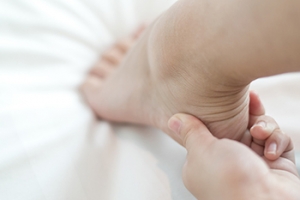
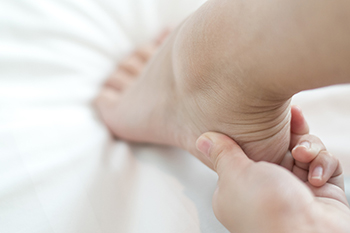
A condition called Sever’s disease actually sounds worse than it is. It is a harmless, though temporarily painful, condition that usually affects children between the age of 8 and 13 who are physically active. The good news is that with the right treatment and a bit of time, it will go away in most cases. Medically termed calcaneal apophysitis, Sever’s disease is the inflammation of the growth plate in the heel. Repetitive stress from running and jumping, or other high-impact activities, affects the area at the back of the heel that is not fully developed. Additional stress from the pulling of the Achilles tendon exacerbates the condition. Your child may complain of pain and some swelling under the heel. Rest from the activity causing the pain is usually the first recommendation. Heel padding in the shoes may also help in mild cases, along with certain exercises to stretch the calf muscles. If you have a child who participates in sports, it is a good idea to develop a relationship with a podiatrist who can oversee their foot development and treat foot or ankle problems as they arise.
Sever's disease often occurs in children and teens. If your child is experiencing foot or ankle pain, see Jon McCreary, DPM from Fort Worth Podiatry. Our doctor can treat your child’s foot and ankle needs.
Sever’s Disease
Sever’s disease is also known as calcaneal apophysitis, which is a medical condition that causes heel pain I none or both feet. The disease is known to affect children between the ages of 8 and 14.
Sever’s disease occurs when part of the child’s heel known as the growth plate (calcaneal epiphysis) is attached to the Achilles tendon. This area can suffer injury when the muscles and tendons of the growing foot do not keep pace with bone growth. Therefore, the constant pain which one experiences at the back of the heel will make the child unable to put any weight on the heel. The child is then forced to walk on their toes.
Symptoms
Acute pain – Pain associated with Sever’s disease is usually felt in the heel when the child engages in physical activity such as walking, jumping and or running.
Highly active – Children who are very active are among the most susceptible in experiencing Sever’s disease, because of the stress and tension placed on their feet.
If you have any questions, please feel free to contact our office located in Fort Worth, TX . We offer the newest diagnostic and treatment technologies for all your foot care needs.
Sever's Disease
Sever’s disease, also known as calcaneal apophysitis is a common bone disorder that occurs during childhood. The disease is defined as an inflammation of the growth plate in the heel. When a child has a growth spurt, his heel bone grows faster than the muscles, tendons, and ligaments in his leg. This disease is a result of overuse. The people who are most likely to be affected by this disease are children who are in a growth spurt, especially boys who are from the ages of 5 to 13 years old. 60% of children with Sever’s disease have both heels involved.
Symptoms of this disease are heel pain that intensifies during running and jumping activities. The pain is typically localized to the posterior part of the heel. Symptoms may be severe, and they can easily interfere with daily activities. Children who play soccer, baseball, and basketball are more likely to develop Sever’s disease.
Your doctor will diagnose your child based on his or her symptoms, x-rays are generally not helpful in diagnosing this disease. Your doctor may examine both heels and ask your child questions about his or her activity level in sports. Your doctor may then use the squeeze test on your child’s heel to see if there is any pain. Nevertheless, some doctors might still use x-rays to rule out any other issues such as fractures, infections, and tumors.
Sever’s disease can be prevented by maintaining good flexibility while your child is growing. Another prevention method is to wear good-quality shoes that have firm support and a shock-absorbent sole. Sever’s disease can be treated by ceasing any activity that causes heel pain. You should apply ice to the injured heel for 20 minutes 3 times a day. Additionally, orthotics should be used for children who have high arches, flat feet, or bowed legs.
If you suspect your child has Sever’s disease, you should make an appointment with your podiatrist to have his or her foot examined. Your doctor may recommend nonsteroidal anti-inflammatory drugs (NSAIDs), such as ibuprofen or naproxen to relieve pain. In more severe cases, your child may need a cast to rest his or her heel. Fortunately, Sever’s disease does not cause long-term foot problems. After treatment, your child should start to feel better within two weeks to two months.
Probable Causes for an Ingrown Toenail
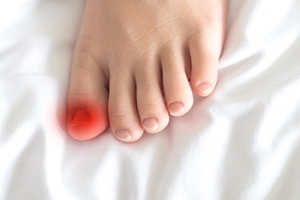
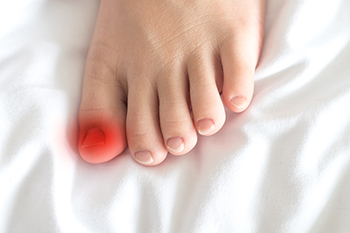
An ingrown toenail is a common foot condition. It occurs as a result of the skin growing into the sides of the nail instead of over it. The symptoms that are generally associated with this ailment often include extreme tenderness, swelling, and is often painful. The big toe is typically affected by an ingrown toenail, although it can affect the other toes. In severe cases, the affected toe may produce a discharge, and can become infected. Ingrown toenails can happen for a variety of reasons. These can include wearing shoes that do not fit correctly, incurring a toe injury, or possibly from genetic reasons. Additionally, it may come from trimming the toenails incorrectly. Relief can come from soaking the toe in warm water, followed by gently pulling the skin away from the nail. If the ingrown toenail is severe, surgery may have to be performed that can remove part of the nail, or the entire nail. It is important to wear shoes that are comfortable, and fit correctly, and it is beneficial to refrain from wearing tight socks. If you are afflicted with an ingrown toenail, please consult with a podiatrist as quickly as possible who can recommend the right treatment for you.
Ingrown toenails may initially present themselves as a minor discomfort, but they may progress into an infection in the skin without proper treatment. For more information about ingrown toenails, contact Jon McCreary, DPM of Fort Worth Podiatry. Our doctor can provide the care you need to keep you pain-free and on your feet.
Ingrown Toenails
Ingrown toenails are caused when the corner or side of a toenail grows into the soft flesh surrounding it. They often result in redness, swelling, pain, and in some cases, infection. This condition typically affects the big toe and may recur if it is not treated properly.
Causes
- Improper toenail trimming
- Genetics
- Improper shoe fitting
- Injury from pedicures or nail picking
- Abnormal gait
- Poor hygiene
You are more likely to develop an ingrown toenail if you are obese, have diabetes, arthritis, or have any fungal infection in your nails. Additionally, people who have foot or toe deformities are at a higher risk of developing an ingrown toenail.
Symptoms
Some symptoms of ingrown toenails are redness, swelling, and pain. In rare cases, there may be a yellowish drainage coming from the nail.
Treatment
Ignoring an ingrown toenail can have serious complications. Infections of the nail border can progress to a deeper soft-tissue infection, which can then turn into a bone infection. You should always speak with your podiatrist if you suspect you have an ingrown toenail, especially if you have diabetes or poor circulation.
If you have any questions, please feel free to contact our office located in Fort Worth, TX . We offer the newest diagnostic and treatment technologies for all your foot care needs.
Ingrown Toenails
Ingrown toenails (onychocryptosis) are a common foot ailment and it is very unpleasant to experience. The condition is caused by an increase in pressure from the ingrowth of the nail edge into the skin of the toe. Ingrown toenails commonly cause pain in those who experience them. In some cases, the skin surrounding the ingrown toenail may break which may lead bacteria to enter through and cause an infection. Common symptoms of this ailment include pain, redness, swelling, and warmth around the toe.
An imbalance between the size of the nail and the enlargement of the nail skin edge causes ingrown toenails. This condition is often caused by improperly trimming the toenails. If you are trying you cut your nails, you should always try to trim straight across instead of in a rounded shape. Ingrown toenails can also be an inherited condition and they may also be caused by improper shoe fitting.
Another common cause of the condition is wearing shoes that are either too small or too large. Other causes include poor foot hygiene, obesity, diabetes, arthritis, edema, and fungal infections. There are many risk factors that may make a person more likely to develop an ingrown toenail. Athletes who play “stop and start” sports such as tennis, soccer, and basketball are most likely to have ingrown toenails.
People who have diabetes, a compromised immune system, or poor circulation should immediately seek care from a podiatrist if they have an ingrown toenail. It is also recommended to seek professional assistance if at-home remedies are not successful within a week or if there is persistent pain.
